The idea in one line: a Christmas cactus flowers on healthy new segments, so the best time to prepare for autumn blooms is during summer, when you can encourage that growth.
Why Summer Is the Moment That Counts
If the plant doesn’t push out strong new leaves in the warm months, there won’t be much for flowers to grow on later. A little regular care now saves a lot of disappointment in November.
Tea as a Plant Tonic
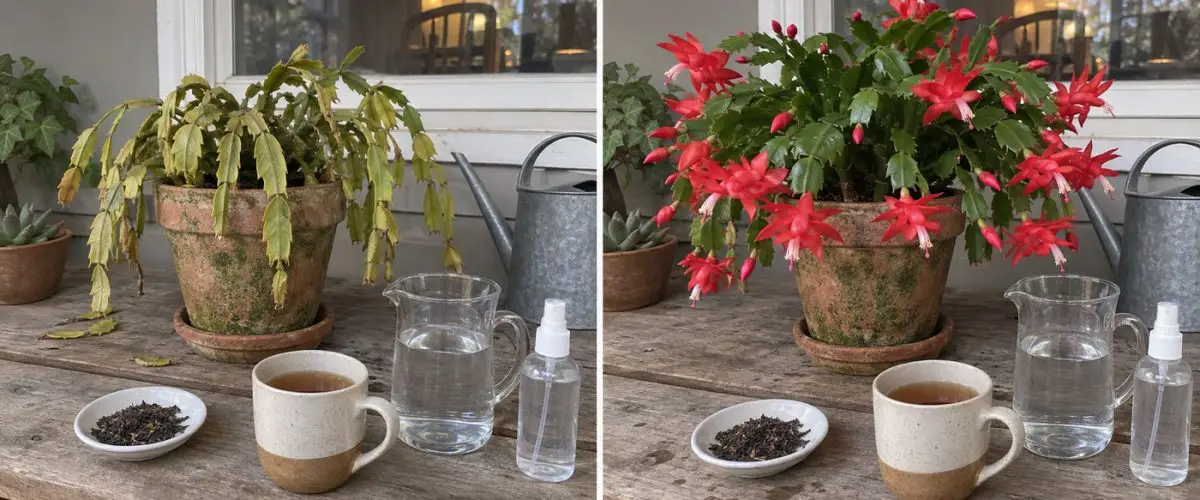
Tea leaves are said to contain phosphorus, iron and potassium, minerals plants use for new growth. There are two easy ways to use them:
- Liquid: brew the tea, let it cool, and water with it.
- Dry leaves: work a small amount of dried tea leaves into the top layer of soil.
Making the Liquid
- Fill a container with water and let it sit for two to three days. This is called rested water, and it lets chlorine escape and the temperature settle.
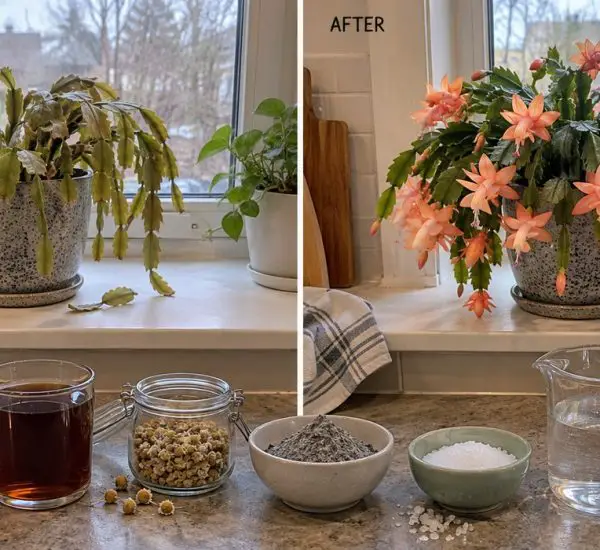
- Stir in one cup of brewed tea. Leftover tea or the dregs from the bottom of the pot are fine.
- Pour slowly around the base of the plant, using a spoon or small ladle to spread it out.
Moisten the plant first if the soil is very dry. Applying the tea to dry soil is not recommended.
Watering Rules That Go with It
- Summer: let the soil dry out completely between waterings.
- Winter: water sparingly, just enough to keep the roots from drying out.
- New cuttings: give them a bit more attention so they can establish.
Humidity and Light
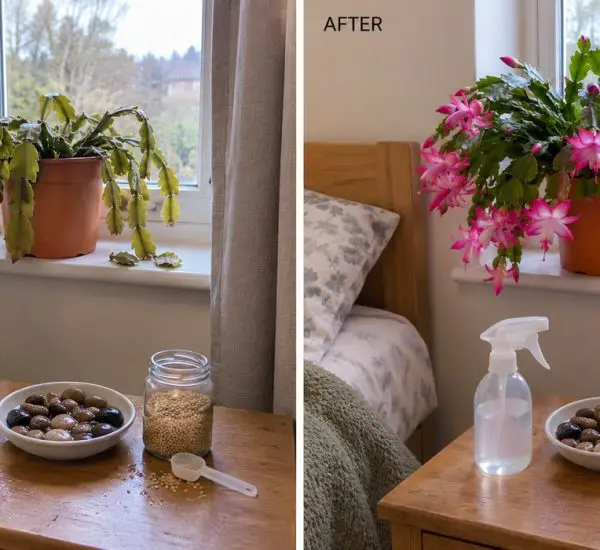
- Misting: Christmas cacti love humid air. In summer, spray the leaves regularly, or at least once a week.
- Rainwater: when the weather is mild, put the pots outside for a gentle rain. It’s a real treat for them.
- Light: slightly shaded spots suit them. Direct sun stresses the leaves.
Autumn: Add Fresh Air
As temperatures drop, move the plant to a window where it gets fresh air. The cooler breeze encourages buds to form at the tips of the leaves. Keep misting while you wait.
A Monthly Oxygen Spray
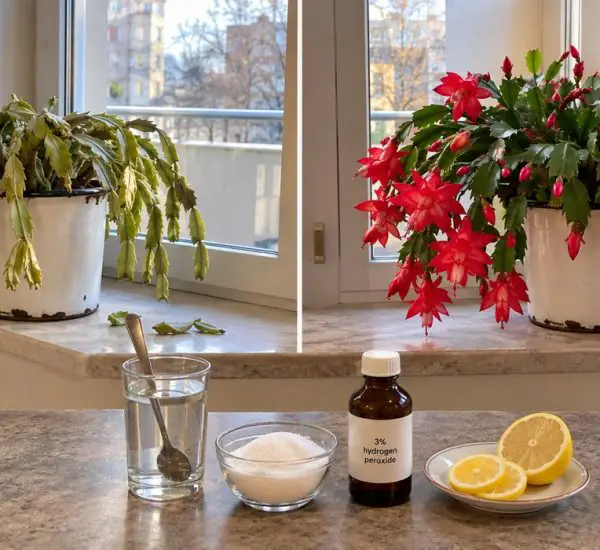
Once a month, mix one tablespoon of hydrogen peroxide into one liter of water and spray the leaves. The idea is to strengthen the plant and discourage disease. On other weeks, mist with plain water to keep the leaves fresh.
Looking After Cuttings and Young Plants
Small, freshly planted cuttings are more fragile than established plants. Water them lightly so they can settle in, keep them in a cool indoor spot with some shade during summer, and avoid strong direct light. Give them time: the first sign of success is usually a couple of tiny new segments.
If New Growth Is Slow
- Check that the soil is drying out between waterings. Constantly wet soil holds growth back.
- Look at the light. It should be bright but indirect, not scorching and not dim.
- Be consistent: the tea, the misting and the monthly spray all work best as a steady routine rather than a one-off.
What to Expect
Young plants and cuttings take time. Stick with the routine through summer and early fall, and watch for tiny fresh segments appearing from the sides. They’re the clearest sign that flower buds will follow.