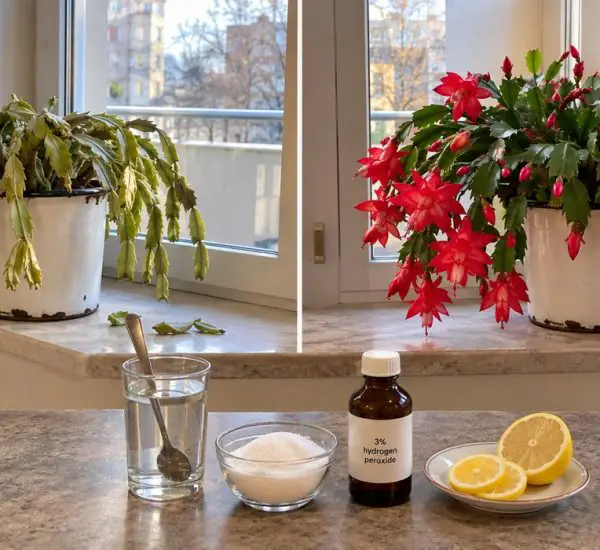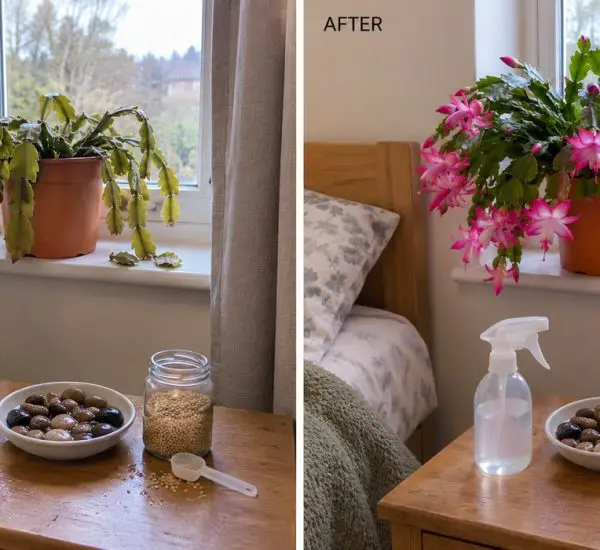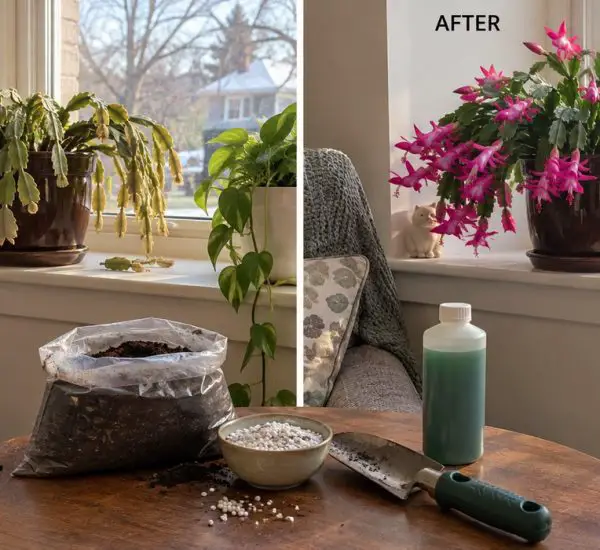
A Christmas cactus that stays green but never flowers usually isn’t broken, it’s just missing the signals that tell it winter is coming. This three-part routine supplies them: a cool rest, long dark nights and a homemade feed that supports bud formation.
What Gets in the Way of Flowers
This plant is a tropical succulent from shady, humid forests, not a true cactus. These are the usual reasons it doesn’t bloom:
- It was too warm or too bright before the bloom season
- Watering has been erratic
- It never got a rest in early fall
- The soil is short on phosphorus
- It has been stressed by moves, drafts or sudden temperature changes
Part 1: A Cool Rest
In late September or early October, water only once every two to three weeks and move the plant somewhere cooler, around 13-15°C (55-60°F), with indirect light. This rest imitates its natural cycle and gets bud development started.
Part 2: Long Dark Nights
For roughly 3-4 weeks, the plant needs 12-14 hours of darkness each day. A dark room works, or you can set a cardboard box over it overnight. This change in day length is the main thing that makes the plant begin to form buds.
Part 3: The Homemade Feed
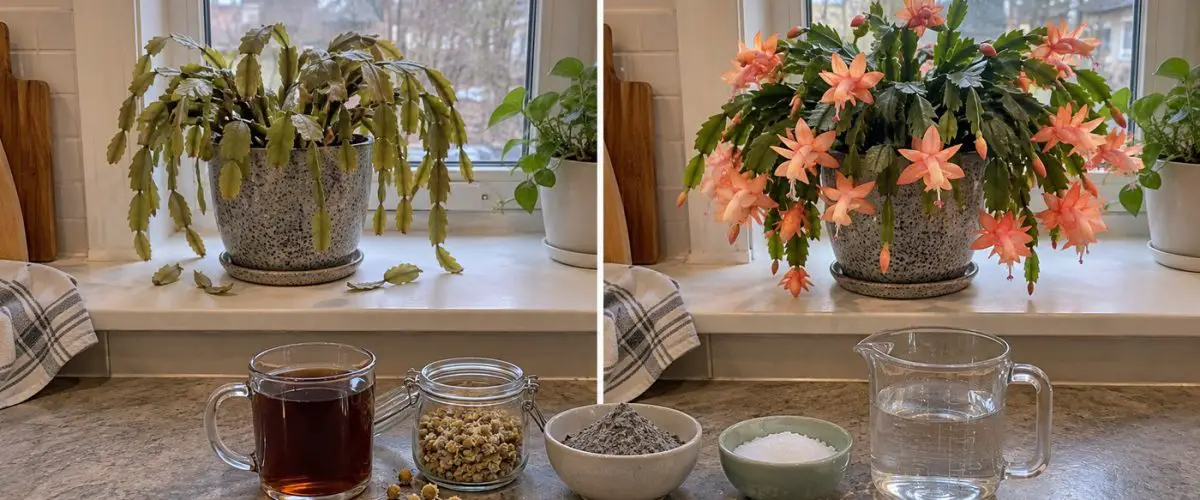
Ingredients
- 1 teaspoon wood ash or bone meal (for phosphorus)
- 1 teaspoon black tea leaves, brewed, or a weak chamomile tea (potassium and trace minerals)
- 1 liter lukewarm water
- Optional: a tiny pinch of Epsom salts, said to keep leaves and flowers sturdier
Method
- Mix everything in a jug.
- Leave it for an hour or two, then strain it.
- Pour 100-150 ml around the plant every two weeks, from late October to January.
What Happens Next
After a couple of weeks you should see small buds at the tips of the segments. They swell and open into pink, red, white or peach flowers. The stems stay firm and the blooms often last into late winter.
Keeping the Flowers Going
- Don’t move the plant once it’s in bud, because changes in light and drafts make buds fall.
- Once it’s blooming, keep the room moderate, about 18-21°C (64-70°F).
- Give a light misting in dry, heated rooms.
- After the flowers finish, allow 4-6 weeks of rest: less water and no feeding.
Mistakes to Skip
- Too much water: roots rot easily. Use a mix that drains freely and water when the top inch is dry.
- Plain cactus soil: it prefers something richer that holds a little moisture but still has good air flow.
- Warm, bright conditions before bloom season: it needs cooler, darker weeks to start flowering.
- Feeding only nitrogen: that grows leaves rather than flowers.
Quick Questions
Wood ash or bone meal? Either one works as the phosphorus source in the recipe, so use whichever you have.
How often do I apply the feed? About every two weeks, from late October through January, using 100-150 ml each time.
No buds yet? Re-check the basics first: is the plant getting a full 12-14 hours of real darkness, and is the room cool enough at night?
What about the tea? Black tea or a weak chamomile both do the job, and you only need a teaspoon of the leaves per liter of water.
Bottom Line
Rest, darkness and a spoonful of natural nutrition: that’s often all a shy Christmas cactus needs to turn into the star of your winter plants.