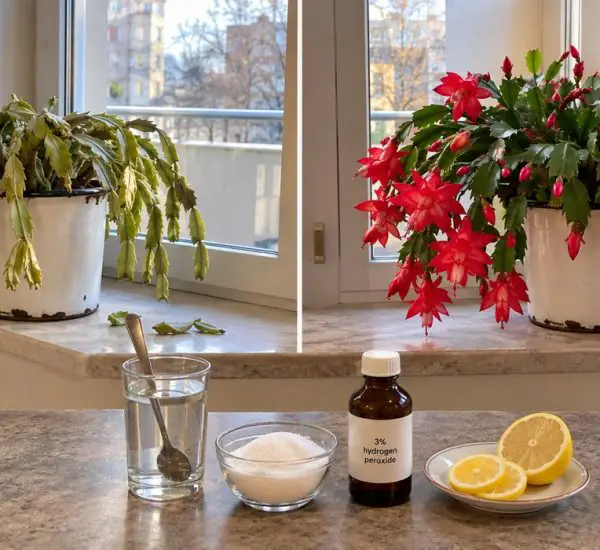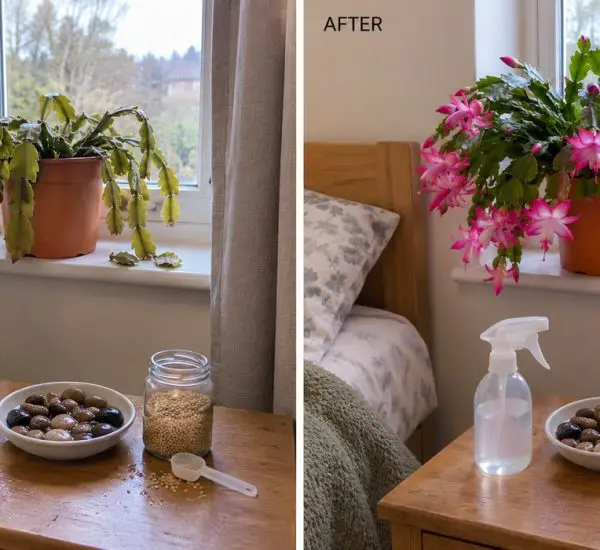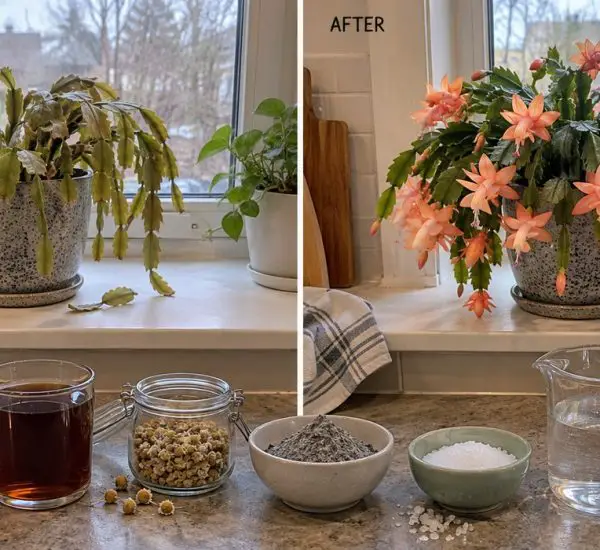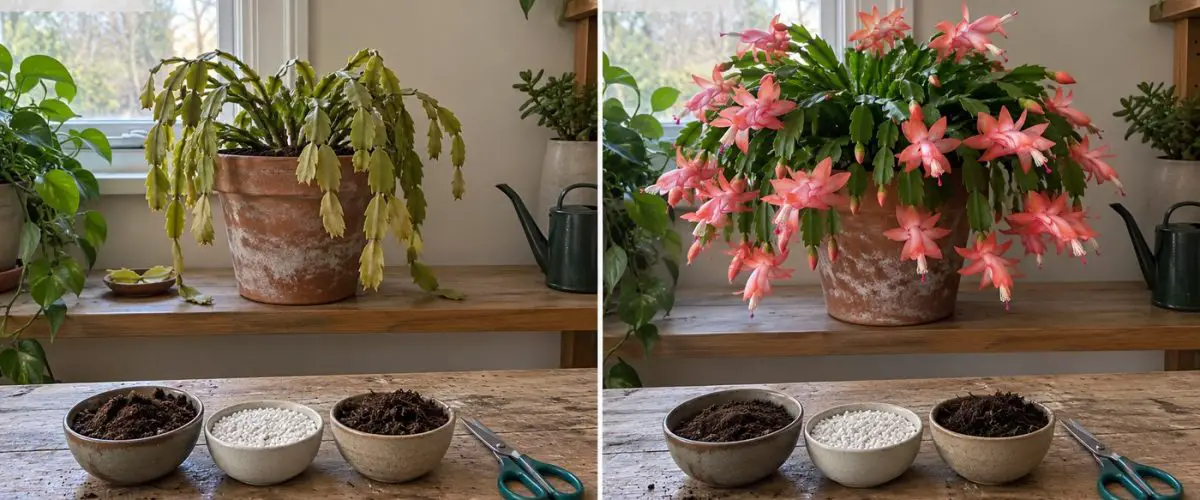
The principle: florists don’t wait for the seasons. They recreate the conditions a Christmas cactus needs to flower, so the plant blooms when they decide it should, and sometimes more than once a year.
Understanding the Plant
The Christmas cactus (Schlumbergera truncata) comes from humid Brazilian rainforest, where it grows on trunks and rocks beneath the canopy. Naturally, it blooms between late November and January. Its flat, jointed stems and tubular red, pink, orange or white flowers make it a favorite festive plant.
Trick 1: Control the Light
- Keep it in bright, indirect light, ideally near a north- or east-facing window.
- While it flowers, 8 hours of daylight is enough.
- To encourage new buds, cut back to about 10 hours of light and 14 of darkness for about four weeks.
- No dark spot at home? Cover it with a box or light cloth at night.
Trick 2: Water from Below
Overwatering is a very common problem. The plant likes moisture but not puddles. Water thoroughly when the top 2 inches of soil are dry, which in practice means every 7-10 days in spring and summer and every 2-3 weeks in winter. Florists often use the saucer method, filling the dish and letting the roots take what they want.
Trick 3: Feed by Phase
Between spring and early autumn, a balanced fertilizer every two months is enough. When buds are forming, a formula like 10-15-10, high in phosphorus and potassium, helps. After flowering stops, stop feeding to let the plant rest.
Trick 4: Mix the Right Soil
A proven florist mix is:
- Two parts regular potting soil
- One part coarse sand or perlite
- One part compost or coconut fiber
It drains well, holds a bit of moisture and guards against root rot.
Trick 5: Use Temperature as a Switch
The comfortable range is 15-23°C (59-73°F). To start buds, let night temperatures fall to roughly 10-12°C (50-54°F). In cold weather, bring the plant in and keep it from touching cold windows. Rapid swings are a classic reason for dropped buds.
Trick 6: Stay Ahead of Pests
Spider mites, mealybugs and fungal spots can strike any plant. Check the stems and leaves regularly, remove damaged parts, and wipe stems with a soft cloth and mild soapy water or use an organic fungicide. Good airflow and moderate humidity prevent most outbreaks.
The Rhythm That Brings Repeat Flowers
Alternate growth with rest. After each bloom, give about six weeks of less water, cooler conditions and less light. Then resume normal care. Repeating this cycle encourages blooms again, with some growers reporting up to three flowerings a year.
Wrap-Up
Filtered light, steady humidity, regular feeding and proper rest are the real secrets. Apply them and your cactus can brighten your home across the seasons.