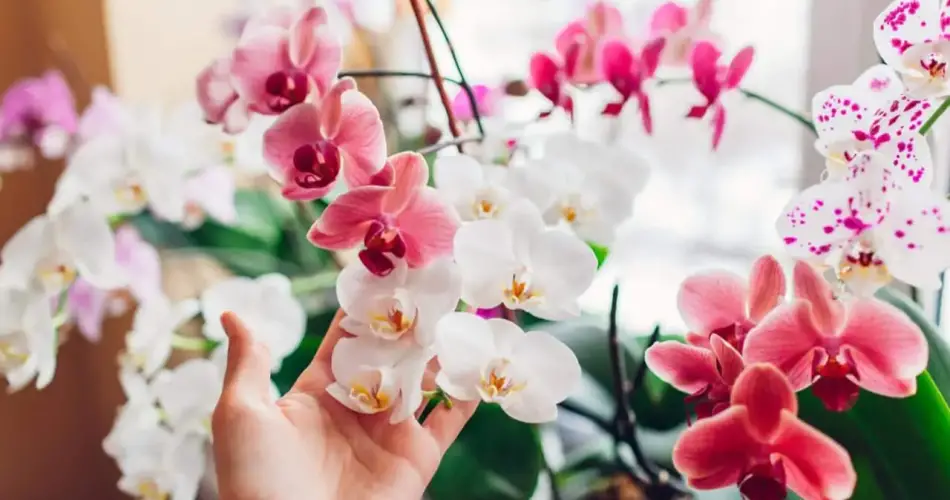
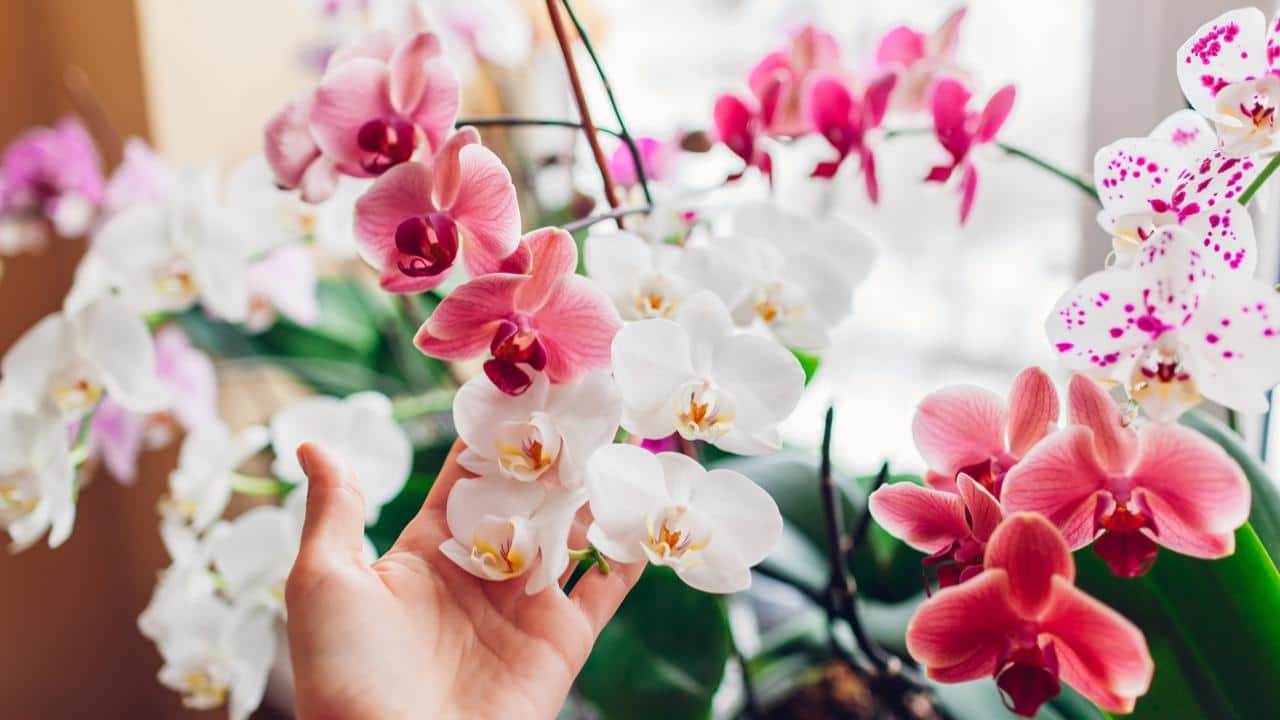
Orchids, with their exquisite beauty, grace our surroundings with vibrant colors, ranging from intense hues to soft shades.
Caring for an orchid is not a daunting task, but it requires a few essential precautions to prevent premature fading and ensure prolonged blooming. Whether receiving an orchid as a gift or purchasing one, understanding its care needs is vital for its well-being.
First and foremost, it’s crucial to recognize that orchids thrive in bright and humid conditions, given their tropical origins. However, they are not meant for open ground planting but should instead be strategically placed within our homes. The preferred orientation is towards the south or east, where the orchid can receive abundant indirect sunlight.
Ensuring that direct sunlight doesn’t hit the orchid is essential, as a lack of light is a primary reason for withering. Maintaining a bright location is key for its overall health. The ideal temperature ranges between 23 – 24°C as a maximum and 16 – 17°C as a minimum.
Humidity is another critical factor to monitor. Excessive humidity can damage the flowers, while insufficient humidity can lead to wrinkled leaves and yellowing. Maintaining around 70% humidity is ideal, making bathrooms or kitchens suitable locations. Placing a saucer filled with expanded clay or gravel, along with occasional misting, aids in sustaining the necessary humidity for the orchid.
When it comes to watering, it’s essential to be conservative. Watering should be minimal and done only when the soil is dry. Once a week is sufficient during winter, while 2 or 3 times a week may be needed in the summer. Watering in the morning is advisable, with attention to preventing stagnation, which can lead to root rot and endanger the orchid.
Implementing these straightforward tips ensures the flourishing of your orchid for many years, allowing you to enjoy its beauty and elegance consistently.


